
Category: Knowledge

  • Emergency Expense Loans in Canada: How to Borrow Without Falling Into a Payday Loan Cycle

    Emergency Expense Loans in Canada: How to Borrow Without Falling Into a Payday Loan Cycle

    Emergency Expense Loans in Canada: How to Borrow Without Falling Into a Payday Loan Cycle

    A car repair, dental bill, broken appliance or urgent travel expense can arrive before your next paycheque. When savings are not enough, the pressure to find money quickly can make the first available loan look attractive. However, speed should not be the only factor in your decision.

    Canadians searching for an emergency expense loan should compare repayment structure, borrowing cost, loan term and affordability. In particular, it is worth understanding how installment-style personal loans differ from very short-term borrowing such as payday loans.

    This guide explains practical payday loan alternatives, how to compare emergency financing and how GoodLoan approaches installment borrowing.

    What is an emergency expense loan?

    “Emergency loan” is a broad consumer term rather than one single type of financial product. It usually describes money borrowed to cover an unexpected, time-sensitive cost. Depending on the provider, the financing might be a personal installment loan, line of credit, credit-card advance or another form of credit.

    Common emergency expenses can include vehicle repairs, essential home repairs, medical or dental costs not fully covered by insurance, urgent travel and other necessary bills.

    Before borrowing, determine the exact amount you need. Borrowing an extra $1,000 “just in case” can increase interest costs and make repayment harder.

    Why payday loans can create repayment pressure

    Payday loans are designed as short-term credit and are generally expected to be repaid quickly. A short repayment window can create cash-flow pressure when a borrower already needed credit because the current budget was tight.

    For example, if an unexpected expense consumes money that would normally cover rent, food and utilities, repaying short-term credit from the next paycheque may leave less money for those same essentials. Some borrowers then look for additional credit, which can contribute to a repeating borrowing cycle.

    The Financial Consumer Agency of Canada provides information about payday loans and their costs. Rules also vary by province, so borrowers should review the requirements that apply where they live.

    Payday loan vs. installment personal loan

    FeaturePayday-style borrowingInstallment personal loan
    Typical structureShort-term repaymentRepayment over scheduled installments
    Cash-flow impactA large repayment may arrive quicklyPayments are spread across an agreed schedule
    What to compareTotal cost and repayment dateAPR, term, payment amount, total repayment and fees
    Best decision factorWhether the full obligation is affordable within your actual budget.

    An installment loan is not automatically the right choice and it is still debt. The advantage of an installment structure is that borrowers can evaluate a defined payment schedule rather than focusing only on obtaining money today.

    Alternatives to consider before taking a payday loan

    1. Use emergency savings if available

    If paying the expense from savings will not leave you unable to cover essentials, using your own funds avoids borrowing costs altogether.

    2. Ask the service provider about a payment plan

    Some dental offices, repair businesses, utilities and other providers may allow payments over time. Ask about the total cost and whether fees or interest apply.

    3. Check a bank or credit-union line of credit

    If you already qualify for lower-cost revolving credit, compare its rate and repayment requirements with other options. Avoid treating an available credit limit as permission to borrow more than necessary.

    4. Consider a personal installment loan

    A personal loan can provide a defined principal amount and repayment schedule. Compare the APR, total cost, term, fees and payment frequency before accepting it.

    5. Ask whether the bill can wait

    Some “urgent” purchases are genuinely urgent; others can be delayed until the next pay period. Separating needs from wants can prevent unnecessary debt.

    How much should you borrow for an emergency?

    Start with the actual invoice or a reliable estimate. If a mechanic quotes $1,400 for an essential repair, for example, build your financing decision around that amount rather than automatically applying for the maximum available.

    Then calculate how much of the cost you can safely cover yourself. If you have $400 available without missing necessities, the financing gap may be $1,000 rather than $1,400. Smaller principal generally means less money on which interest can accrue.

    GoodLoan provides a loan calculator that can help you explore estimated payments before applying.

    What to compare when choosing an emergency loan

    • APR and interest rate: Understand both and read the cost-of-borrowing disclosure.
    • Total repayment: Focus on the total dollars repaid, not only the size of each payment.
    • Loan term: Longer terms can lower individual payments but may increase total interest cost.
    • Payment frequency: Check whether payments align with your income schedule.
    • Fees: Understand mandatory charges and what happens after a returned payment.
    • Prepayment: Check the agreement for your ability to repay early.
    • Affordability: Leave room in your budget for housing, food, utilities, transportation and other essential costs.

    How GoodLoan compares for emergency borrowing

    GoodLoan offers personal lending with installment-style repayment rather than positioning a loan as a one-paycheque fix. Borrowers can review GoodLoan’s rates, fees and terms, read about responsible lending and understand the process through How It Works.

    For someone comparing GoodLoan with a short-term payday product, the useful distinction is repayment structure and transparency—not a blanket claim that one product is right for everyone. A GoodLoan installment loan may be worth considering when you need a defined repayment schedule and the resulting payments are affordable for your budget.

    Red flags when searching for fast loans online

    Urgency can make borrowers vulnerable to scams and misleading offers. Be cautious if a supposed lender asks for unusual upfront payments before releasing funds, pressures you to act immediately, refuses to provide clear loan terms, or makes promises that sound impossible.

    Also be careful with “guaranteed approval” language. Legitimate lending decisions depend on eligibility and underwriting. GoodLoan does not need to promise approval to explain its product clearly; borrowers should expect an application to be reviewed before an offer is made.

    Frequently asked questions

    What can an emergency personal loan be used for?

    Depending on the lender’s terms, borrowers commonly seek personal loans for expenses such as car repairs, home repairs, medical or dental bills and other unexpected costs. Confirm permitted uses with the lender.

    Is an installment loan better than a payday loan?

    There is no universal answer. Installment repayment spreads payments over time, which may be easier to budget for, while the total cost and term still need careful review. Compare the actual offers available to you.

    Should I borrow the maximum amount offered?

    Usually the more useful question is how much you actually need and can afford to repay. Borrowing more than the expense requires can increase your total cost.

    Where can I learn more about GoodLoan?

    Start with GoodLoan’s personal loans page and published rates and terms. You can review the information before deciding whether to apply.

    Deal with the emergency without creating a second one

    The purpose of emergency financing should be to solve a necessary short-term problem with a repayment plan you can realistically manage. Before borrowing, compare alternatives, understand the total cost, choose the smallest practical amount and make sure scheduled payments leave enough room for everyday necessities.

    Considering an installment loan? Explore estimated payments and review GoodLoan’s rates, fees and terms. If the numbers fit your budget, you can apply online with GoodLoan.
  • APR vs. Interest Rate on Personal Loans in Canada: What Borrowers Should Compare

    APR vs. Interest Rate on Personal Loans in Canada: What Borrowers Should Compare

    APR vs. Interest Rate on Personal Loans in Canada: What Borrowers Should Compare

    When comparing a personal loan in Canada, the advertised interest rate is only one number to consider. Borrowers should also look at the annual percentage rate (APR), repayment frequency, loan term, fees and the total amount they will repay. Two loans with similar-looking rates can have different overall costs.

    This guide explains APR vs. interest rate on personal loans in Canada in plain language, shows what affects borrowing costs and gives you a practical checklist for comparing offers. The goal is simple: understand the numbers before signing.

    What is a personal loan interest rate?

    The interest rate is the percentage a lender charges for lending money. It is generally expressed as an annual rate. Your actual interest cost depends on factors such as the amount borrowed, the loan term, how the balance is calculated and your payment schedule.

    For example, borrowing $5,000 does not mean you simply multiply $5,000 by the annual rate and treat that as the final cost in every case. With an amortizing installment loan, scheduled payments can include both principal and interest, and the outstanding balance changes over time.

    What does APR mean on a loan?

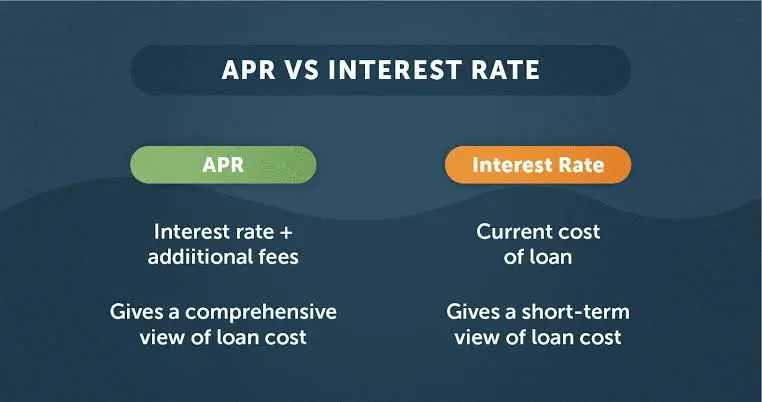
    APR stands for annual percentage rate. It is designed to help express the annualized cost of borrowing. Depending on the loan and applicable disclosure rules, the APR can reflect more than the stated interest rate because certain borrowing costs may need to be considered.

    That is why borrowers should not compare loans using the headline rate alone. Review the lender’s cost-of-borrowing disclosure and loan agreement so you know exactly which charges apply.

    APR vs. interest rate: the key differences

    ItemInterest rateAPR
    What it describesThe rate charged for borrowing the principalAn annualized measure intended to represent borrowing cost
    Useful forUnderstanding how interest is chargedComparing overall borrowing cost more consistently
    Can they be identical?They may be the same or close when there are no additional borrowing costs included in APR calculations.
    What else should you check?Total repayment, payment amount, term, frequency, optional products, NSF charges and prepayment terms.

    In short, both numbers matter. However, neither should be read without the rest of the loan disclosure.

    Why the total cost of borrowing matters

    A lower payment is not automatically a cheaper loan. Extending a loan over more months may reduce each scheduled payment, but it can also increase the amount of interest paid over the full term. Conversely, a shorter term can produce larger payments while reducing the time interest accrues.

    Before accepting an offer, ask yourself whether the scheduled payment fits your normal budget without forcing you to borrow again for groceries, rent, utilities or other essentials.

    A simple comparison example

    Imagine two hypothetical $5,000 loan offers. Loan A has a shorter term and a higher scheduled payment. Loan B stretches repayment over a longer period and therefore has a smaller payment. Even if Loan B feels easier month to month, its total borrowing cost may be higher. The correct comparison is not simply “Which payment is lower?” It is “What will I pay in total, and can I comfortably maintain the schedule?”

    Always use the actual figures in your written agreement rather than relying on a generic example.

    What determines your personal loan rate in Canada?

    Lenders can assess applications differently. Depending on the lender and product, factors may include income, employment stability, existing debt obligations, credit history, requested amount, loan term and the lender’s underwriting criteria. A lender may also verify identity, income or banking information before making a decision.

    For borrowers who want to understand the application process first, GoodLoan explains the steps on its How It Works page. You can also review GoodLoan rates, fees and terms before applying.

    How to compare personal loan offers

    • Compare APR: Use the disclosed APR as one important comparison point.
    • Check the total repayment: Know the dollar amount you are expected to repay over the loan.
    • Review the payment schedule: Confirm whether payments are weekly, bi-weekly or monthly and whether the amount works with your cash flow.
    • Read all fees: Look for charges related to returned payments or other events and distinguish required costs from optional services.
    • Understand prepayment: Check whether you can repay early and whether any charge applies.
    • Check the term: A longer term can make payments smaller but may change total interest cost.
    • Avoid pressure: Take time to read the agreement and ask questions about anything unclear.

    The Government of Canada’s Financial Consumer Agency of Canada also provides consumer information about loans and borrowing, including considerations when taking on debt.

    Where GoodLoan fits into the comparison

    GoodLoan is designed to make key loan information easier to review before a borrower commits. Instead of comparing a lender based only on an advertisement, borrowers can review GoodLoan’s published rates, fees and terms, learn about its responsible lending approach, and use the loan calculator to explore payment scenarios.

    GoodLoan may be a useful option to include in your comparison when you value transparent information, installment-style repayment and the ability to review costs before making a decision. Whether it is the right loan depends on your individual circumstances and the offer for which you qualify.

    Questions to ask before signing a loan agreement

    • What is the interest rate?
    • What is the disclosed APR?
    • How much will I repay in total?
    • How much is each payment and how often is it due?
    • Are there any mandatory fees?
    • What happens if a payment is returned?
    • Can I repay the loan early?
    • Is any insurance or add-on product optional?

    If a lender cannot clearly explain the cost, do not rely on the payment amount alone.

    Frequently asked questions

    Is APR the same as the interest rate?

    Not necessarily. The interest rate describes the rate charged on borrowed funds, while APR is an annualized measure intended to help represent borrowing cost. Review the specific disclosure for the loan you are considering.

    Does a lower monthly payment mean a cheaper personal loan?

    No. A lower payment may result from a longer repayment period. Compare the total repayment and borrowing cost as well as the payment amount.

    Should I compare more than one lender?

    When practical, comparing multiple offers can help you evaluate APR, total cost, payment flexibility, eligibility requirements and service. Make comparisons using the same or similar loan amount and term where possible.

    Can I estimate payments before applying with GoodLoan?

    Yes. You can explore scenarios using GoodLoan’s personal loan calculator. Calculator results are estimates; your actual agreement controls the final terms.

    Compare the full loan, not just one number

    Understanding APR vs. interest rate can make personal loan comparisons more meaningful. Look at the APR, interest rate, term, payment frequency, fees and total repayment together. Most importantly, choose a payment that fits your budget and avoid borrowing more than you need.

    Ready to explore your options? Review GoodLoan’s rates and terms first. If the product fits your needs and budget, you can apply online with GoodLoan.