Tag: Responsible Borrowing

  • Emergency Expense Loans in Canada: How to Borrow Without Falling Into a Payday Loan Cycle

    Emergency Expense Loans in Canada: How to Borrow Without Falling Into a Payday Loan Cycle

    Emergency Expense Loans in Canada: How to Borrow Without Falling Into a Payday Loan Cycle

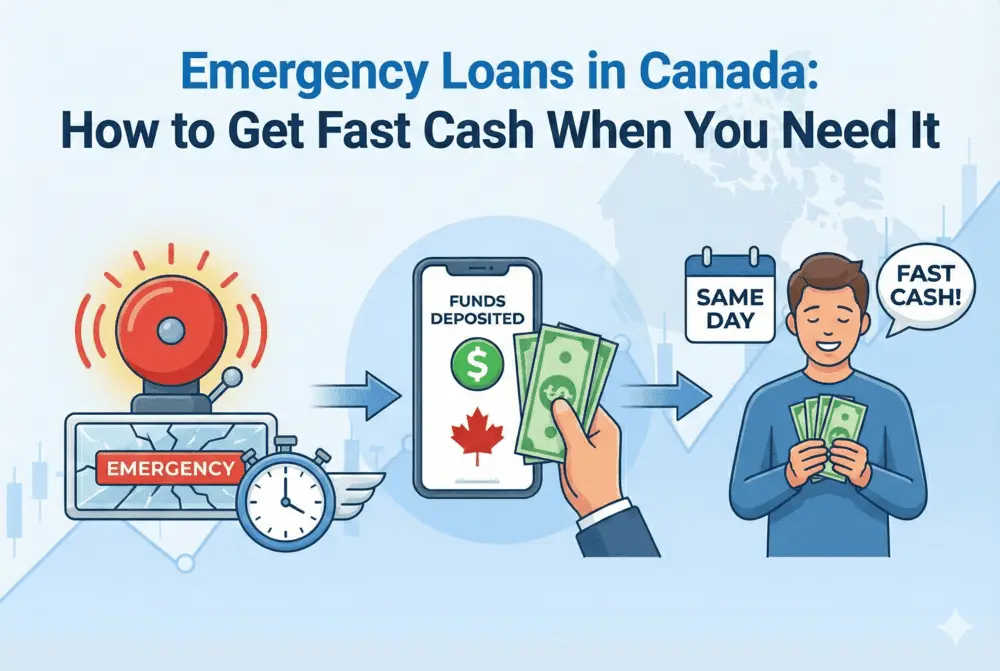
    A car repair, dental bill, broken appliance or urgent travel expense can arrive before your next paycheque. When savings are not enough, the pressure to find money quickly can make the first available loan look attractive. However, speed should not be the only factor in your decision.

    Canadians searching for an emergency expense loan should compare repayment structure, borrowing cost, loan term and affordability. In particular, it is worth understanding how installment-style personal loans differ from very short-term borrowing such as payday loans.

    This guide explains practical payday loan alternatives, how to compare emergency financing and how GoodLoan approaches installment borrowing.

    What is an emergency expense loan?

    “Emergency loan” is a broad consumer term rather than one single type of financial product. It usually describes money borrowed to cover an unexpected, time-sensitive cost. Depending on the provider, the financing might be a personal installment loan, line of credit, credit-card advance or another form of credit.

    Common emergency expenses can include vehicle repairs, essential home repairs, medical or dental costs not fully covered by insurance, urgent travel and other necessary bills.

    Before borrowing, determine the exact amount you need. Borrowing an extra $1,000 “just in case” can increase interest costs and make repayment harder.

    Why payday loans can create repayment pressure

    Payday loans are designed as short-term credit and are generally expected to be repaid quickly. A short repayment window can create cash-flow pressure when a borrower already needed credit because the current budget was tight.

    For example, if an unexpected expense consumes money that would normally cover rent, food and utilities, repaying short-term credit from the next paycheque may leave less money for those same essentials. Some borrowers then look for additional credit, which can contribute to a repeating borrowing cycle.

    The Financial Consumer Agency of Canada provides information about payday loans and their costs. Rules also vary by province, so borrowers should review the requirements that apply where they live.

    Payday loan vs. installment personal loan

    FeaturePayday-style borrowingInstallment personal loan
    Typical structureShort-term repaymentRepayment over scheduled installments
    Cash-flow impactA large repayment may arrive quicklyPayments are spread across an agreed schedule
    What to compareTotal cost and repayment dateAPR, term, payment amount, total repayment and fees
    Best decision factorWhether the full obligation is affordable within your actual budget.

    An installment loan is not automatically the right choice and it is still debt. The advantage of an installment structure is that borrowers can evaluate a defined payment schedule rather than focusing only on obtaining money today.

    Alternatives to consider before taking a payday loan

    1. Use emergency savings if available

    If paying the expense from savings will not leave you unable to cover essentials, using your own funds avoids borrowing costs altogether.

    2. Ask the service provider about a payment plan

    Some dental offices, repair businesses, utilities and other providers may allow payments over time. Ask about the total cost and whether fees or interest apply.

    3. Check a bank or credit-union line of credit

    If you already qualify for lower-cost revolving credit, compare its rate and repayment requirements with other options. Avoid treating an available credit limit as permission to borrow more than necessary.

    4. Consider a personal installment loan

    A personal loan can provide a defined principal amount and repayment schedule. Compare the APR, total cost, term, fees and payment frequency before accepting it.

    5. Ask whether the bill can wait

    Some “urgent” purchases are genuinely urgent; others can be delayed until the next pay period. Separating needs from wants can prevent unnecessary debt.

    How much should you borrow for an emergency?

    Start with the actual invoice or a reliable estimate. If a mechanic quotes $1,400 for an essential repair, for example, build your financing decision around that amount rather than automatically applying for the maximum available.

    Then calculate how much of the cost you can safely cover yourself. If you have $400 available without missing necessities, the financing gap may be $1,000 rather than $1,400. Smaller principal generally means less money on which interest can accrue.

    GoodLoan provides a loan calculator that can help you explore estimated payments before applying.

    What to compare when choosing an emergency loan

    • APR and interest rate: Understand both and read the cost-of-borrowing disclosure.
    • Total repayment: Focus on the total dollars repaid, not only the size of each payment.
    • Loan term: Longer terms can lower individual payments but may increase total interest cost.
    • Payment frequency: Check whether payments align with your income schedule.
    • Fees: Understand mandatory charges and what happens after a returned payment.
    • Prepayment: Check the agreement for your ability to repay early.
    • Affordability: Leave room in your budget for housing, food, utilities, transportation and other essential costs.

    How GoodLoan compares for emergency borrowing

    GoodLoan offers personal lending with installment-style repayment rather than positioning a loan as a one-paycheque fix. Borrowers can review GoodLoan’s rates, fees and terms, read about responsible lending and understand the process through How It Works.

    For someone comparing GoodLoan with a short-term payday product, the useful distinction is repayment structure and transparency—not a blanket claim that one product is right for everyone. A GoodLoan installment loan may be worth considering when you need a defined repayment schedule and the resulting payments are affordable for your budget.

    Red flags when searching for fast loans online

    Urgency can make borrowers vulnerable to scams and misleading offers. Be cautious if a supposed lender asks for unusual upfront payments before releasing funds, pressures you to act immediately, refuses to provide clear loan terms, or makes promises that sound impossible.

    Also be careful with “guaranteed approval” language. Legitimate lending decisions depend on eligibility and underwriting. GoodLoan does not need to promise approval to explain its product clearly; borrowers should expect an application to be reviewed before an offer is made.

    Frequently asked questions

    What can an emergency personal loan be used for?

    Depending on the lender’s terms, borrowers commonly seek personal loans for expenses such as car repairs, home repairs, medical or dental bills and other unexpected costs. Confirm permitted uses with the lender.

    Is an installment loan better than a payday loan?

    There is no universal answer. Installment repayment spreads payments over time, which may be easier to budget for, while the total cost and term still need careful review. Compare the actual offers available to you.

    Should I borrow the maximum amount offered?

    Usually the more useful question is how much you actually need and can afford to repay. Borrowing more than the expense requires can increase your total cost.

    Where can I learn more about GoodLoan?

    Start with GoodLoan’s personal loans page and published rates and terms. You can review the information before deciding whether to apply.

    Deal with the emergency without creating a second one

    The purpose of emergency financing should be to solve a necessary short-term problem with a repayment plan you can realistically manage. Before borrowing, compare alternatives, understand the total cost, choose the smallest practical amount and make sure scheduled payments leave enough room for everyday necessities.

    Considering an installment loan? Explore estimated payments and review GoodLoan’s rates, fees and terms. If the numbers fit your budget, you can apply online with GoodLoan.
  • APR vs. Interest Rate on Personal Loans in Canada: What Borrowers Should Compare

    APR vs. Interest Rate on Personal Loans in Canada: What Borrowers Should Compare

    APR vs. Interest Rate on Personal Loans in Canada: What Borrowers Should Compare

    When comparing a personal loan in Canada, the advertised interest rate is only one number to consider. Borrowers should also look at the annual percentage rate (APR), repayment frequency, loan term, fees and the total amount they will repay. Two loans with similar-looking rates can have different overall costs.

    This guide explains APR vs. interest rate on personal loans in Canada in plain language, shows what affects borrowing costs and gives you a practical checklist for comparing offers. The goal is simple: understand the numbers before signing.

    What is a personal loan interest rate?

    The interest rate is the percentage a lender charges for lending money. It is generally expressed as an annual rate. Your actual interest cost depends on factors such as the amount borrowed, the loan term, how the balance is calculated and your payment schedule.

    For example, borrowing $5,000 does not mean you simply multiply $5,000 by the annual rate and treat that as the final cost in every case. With an amortizing installment loan, scheduled payments can include both principal and interest, and the outstanding balance changes over time.

    What does APR mean on a loan?

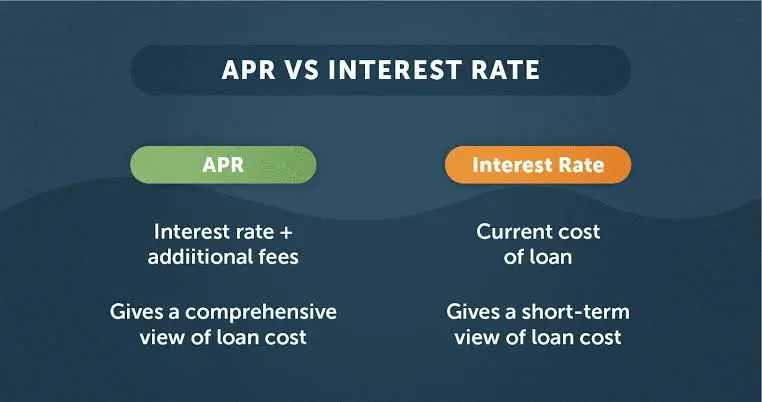
    APR stands for annual percentage rate. It is designed to help express the annualized cost of borrowing. Depending on the loan and applicable disclosure rules, the APR can reflect more than the stated interest rate because certain borrowing costs may need to be considered.

    That is why borrowers should not compare loans using the headline rate alone. Review the lender’s cost-of-borrowing disclosure and loan agreement so you know exactly which charges apply.

    APR vs. interest rate: the key differences

    ItemInterest rateAPR
    What it describesThe rate charged for borrowing the principalAn annualized measure intended to represent borrowing cost
    Useful forUnderstanding how interest is chargedComparing overall borrowing cost more consistently
    Can they be identical?They may be the same or close when there are no additional borrowing costs included in APR calculations.
    What else should you check?Total repayment, payment amount, term, frequency, optional products, NSF charges and prepayment terms.

    In short, both numbers matter. However, neither should be read without the rest of the loan disclosure.

    Why the total cost of borrowing matters

    A lower payment is not automatically a cheaper loan. Extending a loan over more months may reduce each scheduled payment, but it can also increase the amount of interest paid over the full term. Conversely, a shorter term can produce larger payments while reducing the time interest accrues.

    Before accepting an offer, ask yourself whether the scheduled payment fits your normal budget without forcing you to borrow again for groceries, rent, utilities or other essentials.

    A simple comparison example

    Imagine two hypothetical $5,000 loan offers. Loan A has a shorter term and a higher scheduled payment. Loan B stretches repayment over a longer period and therefore has a smaller payment. Even if Loan B feels easier month to month, its total borrowing cost may be higher. The correct comparison is not simply “Which payment is lower?” It is “What will I pay in total, and can I comfortably maintain the schedule?”

    Always use the actual figures in your written agreement rather than relying on a generic example.

    What determines your personal loan rate in Canada?

    Lenders can assess applications differently. Depending on the lender and product, factors may include income, employment stability, existing debt obligations, credit history, requested amount, loan term and the lender’s underwriting criteria. A lender may also verify identity, income or banking information before making a decision.

    For borrowers who want to understand the application process first, GoodLoan explains the steps on its How It Works page. You can also review GoodLoan rates, fees and terms before applying.

    How to compare personal loan offers

    • Compare APR: Use the disclosed APR as one important comparison point.
    • Check the total repayment: Know the dollar amount you are expected to repay over the loan.
    • Review the payment schedule: Confirm whether payments are weekly, bi-weekly or monthly and whether the amount works with your cash flow.
    • Read all fees: Look for charges related to returned payments or other events and distinguish required costs from optional services.
    • Understand prepayment: Check whether you can repay early and whether any charge applies.
    • Check the term: A longer term can make payments smaller but may change total interest cost.
    • Avoid pressure: Take time to read the agreement and ask questions about anything unclear.

    The Government of Canada’s Financial Consumer Agency of Canada also provides consumer information about loans and borrowing, including considerations when taking on debt.

    Where GoodLoan fits into the comparison

    GoodLoan is designed to make key loan information easier to review before a borrower commits. Instead of comparing a lender based only on an advertisement, borrowers can review GoodLoan’s published rates, fees and terms, learn about its responsible lending approach, and use the loan calculator to explore payment scenarios.

    GoodLoan may be a useful option to include in your comparison when you value transparent information, installment-style repayment and the ability to review costs before making a decision. Whether it is the right loan depends on your individual circumstances and the offer for which you qualify.

    Questions to ask before signing a loan agreement

    • What is the interest rate?
    • What is the disclosed APR?
    • How much will I repay in total?
    • How much is each payment and how often is it due?
    • Are there any mandatory fees?
    • What happens if a payment is returned?
    • Can I repay the loan early?
    • Is any insurance or add-on product optional?

    If a lender cannot clearly explain the cost, do not rely on the payment amount alone.

    Frequently asked questions

    Is APR the same as the interest rate?

    Not necessarily. The interest rate describes the rate charged on borrowed funds, while APR is an annualized measure intended to help represent borrowing cost. Review the specific disclosure for the loan you are considering.

    Does a lower monthly payment mean a cheaper personal loan?

    No. A lower payment may result from a longer repayment period. Compare the total repayment and borrowing cost as well as the payment amount.

    Should I compare more than one lender?

    When practical, comparing multiple offers can help you evaluate APR, total cost, payment flexibility, eligibility requirements and service. Make comparisons using the same or similar loan amount and term where possible.

    Can I estimate payments before applying with GoodLoan?

    Yes. You can explore scenarios using GoodLoan’s personal loan calculator. Calculator results are estimates; your actual agreement controls the final terms.

    Compare the full loan, not just one number

    Understanding APR vs. interest rate can make personal loan comparisons more meaningful. Look at the APR, interest rate, term, payment frequency, fees and total repayment together. Most importantly, choose a payment that fits your budget and avoid borrowing more than you need.

    Ready to explore your options? Review GoodLoan’s rates and terms first. If the product fits your needs and budget, you can apply online with GoodLoan.
  • Installment Loan vs. Payday Loan in Canada: What Is the Difference?

    Installment Loan vs. Payday Loan in Canada: What Is the Difference?

    The Short Answer

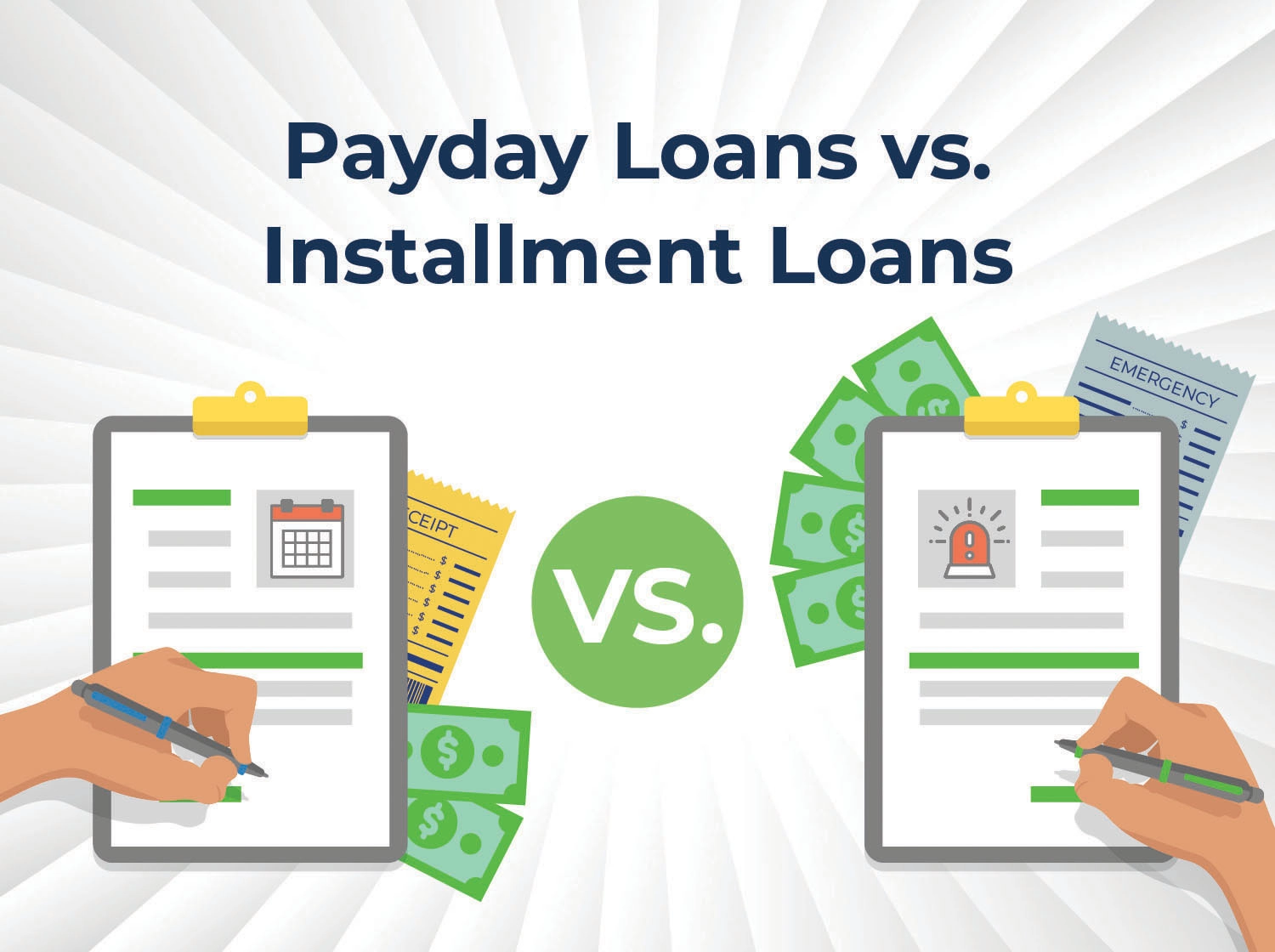
    An installment loan and a payday loan both let you borrow money in Canada. However, they work in very different ways. You repay an installment loan through several scheduled payments over time. In contrast, you usually repay a payday loan in one lump sum on your next payday. This difference affects how each loan fits into your weekly or monthly cash flow.

    Payday loans also carry a short term and a high cost. In most cases, they cover a cash shortage for only a few weeks. Installment loans, on the other hand, offer a longer repayment period. As a result, each scheduled payment may fit more easily into a monthly budget.

    In Canada, provinces regulate payday loans. Rules typically cap these loans at $1,500 and limit the term to 62 days or less. Where specific payday-loan rules apply, lenders may charge up to $14 for every $100 you borrow. You can review the current rules in the Financial Consumer Agency of Canada payday-loan guide. The FCAC also explains how regular borrowing works in its personal-loan guide.

    What Is an Installment Loan?

    An installment loan gives you a lump sum of money upfront. You then repay it over a set period. Depending on the lender, you may make weekly, biweekly or monthly payments. The term can last a few months or several years. For example, a lender might set biweekly payments that match your paycheque schedule, which can make budgeting simpler.

    Because you make several payments instead of one, an installment loan may create less pressure on a single paycheque. Still, a longer term can increase the total interest you pay. Therefore, always compare the annual percentage rate (APR), fees and total cost before you accept an offer.

    Before approving an application, an installment lender may review:

    • Your income and employment
    • Your current debts and regular expenses
    • Your credit history
    • The payment amount you can reasonably afford

    What Is a Payday Loan in Canada?

    A payday loan is a small, short-term loan. Lenders design it to cover a brief cash-flow gap. Usually, you must repay the principal and borrowing cost together on or before your next payday. For instance, a $300 payday loan might come due in full just two weeks after you receive it.

    Although the dollar fee may look small, the cost can run high compared with the amount and time involved. In addition, one large repayment can leave less money for rent, food and other bills. As a result, some borrowers take out another short-term loan, which can start a costly borrowing cycle.

    Installment Loan vs. Payday Loan: Key Differences

    FeatureInstallment LoanPayday Loan
    Typical amountVaries by lenderUsually up to $1,500
    Repayment periodWeeks to yearsNo more than 62 days
    Payment patternSeveral scheduled paymentsUsually one lump-sum payment
    Borrowing costVaries by APR, fees and termUp to $14 per $100 where regulated
    Application reviewIncome, debts and often credit historyUsually income or bank-account activity

    The payment structure marks the clearest difference between these two loan types. However, a smaller scheduled payment does not always mean a cheaper loan. For that reason, compare the total repayment amount as well as the payment size.

    Some provinces also allow extended payment options for repeat borrowers, while others set additional limits on rollovers. Always check your province’s specific payday-loan rules before you sign an agreement.

    How to Compare Your Options

    Before you borrow, read the complete loan agreement carefully. A careful review now can prevent costly surprises later. Then, ask yourself these questions:

    1. What is the APR?
    2. How much will I repay in total?
    3. Are there any optional or required fees?
    4. How much is each payment, and when is it due?
    5. Can I make every payment after covering my essential expenses?
    6. What happens if I miss or return a payment?
    7. Can I repay the loan early without a penalty?
    Tip: First, list your next paycheque and essential bills. Next, subtract the proposed loan payment. If the remaining amount is too small, consider a lower amount or another option.

    What Happens If You Miss a Payment?

    If you miss an installment payment, the lender may charge a fee or report the missed payment to a credit bureau. The result depends on your agreement. Therefore, contact the lender as soon as you expect a problem.

    If you cannot repay a payday loan on time, the lender may add extra charges. More importantly, the shortfall may push you toward another loan. Consequently, confirm that the full repayment fits your budget before you borrow.

    A Simple Example

    Suppose you need to borrow $1,000. With a payday loan, you may need to repay the full $1,000 plus the borrowing cost from one paycheque. With an installment loan, you can divide the balance across several payments instead. For example, a $14-per-$100 fee on a $1,000 payday loan could add up to $140 in borrowing cost within just a few weeks. An installment loan spread over several months may carry a lower rate, though the longer term can still raise the total cost.

    The installment structure may feel easier from week to week. Nevertheless, you still need to check the APR and the total repayment. In the end, the best option depends on the full cost, the payment dates and your available budget.

    How GoodLoan.ca Compares

    đź“‹

    Simple Online Application

    You can apply online. However, GoodLoan does not guarantee approval or specific loan terms.

    📊

    Clear Payment Schedule

    You can review your payment dates, amounts and loan terms before you accept an offer.

    🔍

    Affordability Review

    GoodLoan considers your income, existing obligations and credit information.

    The Bottom Line

    Installment loans spread your repayment over several dates. Payday loans usually require one large payment within a short period. Therefore, an installment loan may offer a more manageable schedule for many borrowers. However, no loan is automatically affordable. Finally, compare the APR, fees, total repayment and effect on your budget before you decide.

    Ready to Review Your Options?

    Submit an application to see whether you qualify. Approval and final terms depend on GoodLoan’s review.

    Apply Now

  • How to Apply for an Installment Loan Online in Canada

    How to Apply for an Installment Loan Online in Canada

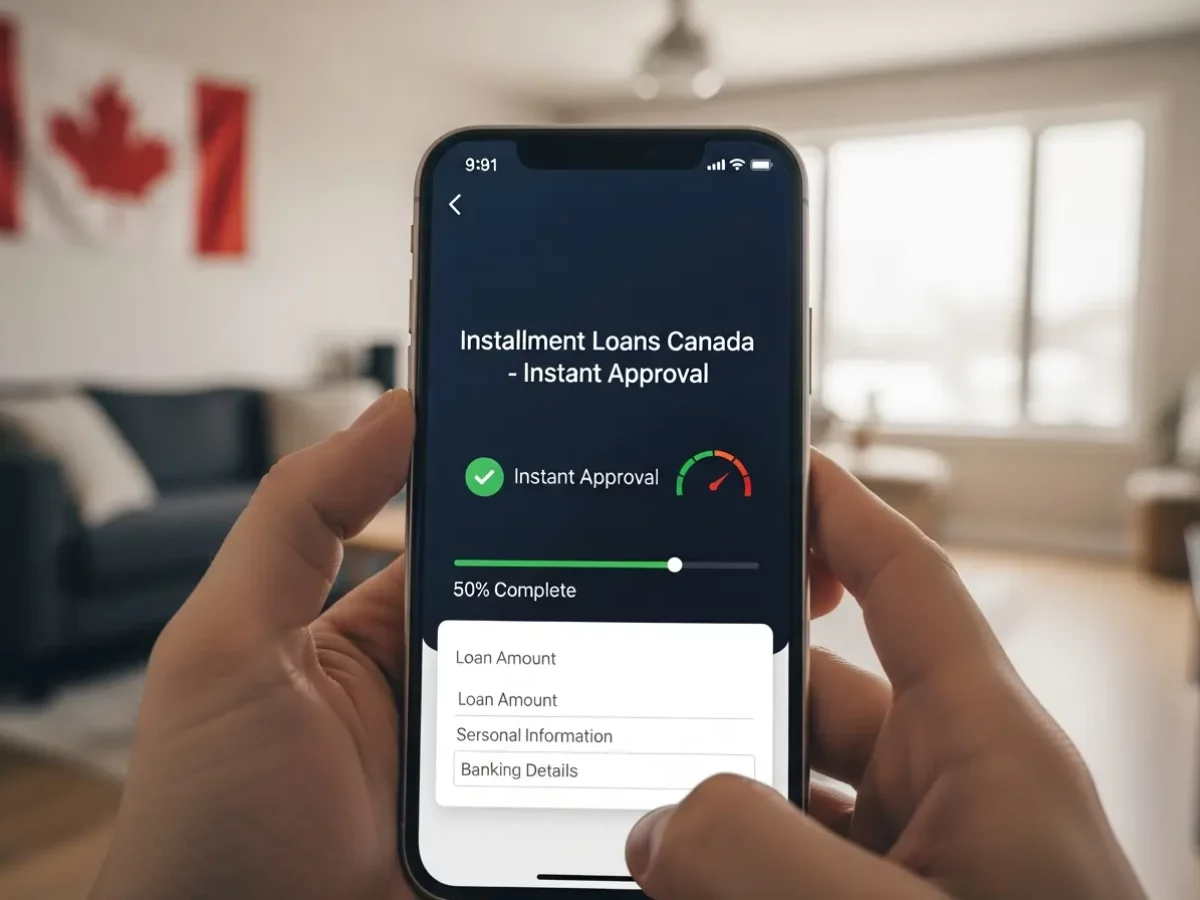
    An online installment loan allows you to apply from home and repay the money through scheduled payments. Start by comparing lenders and checking your eligibility. Next, gather your documents and review the complete offer before signing.

    Online installment loan application steps in Canada
    Prepare your documents and compare the full borrowing cost before applying online.

    Before Applying for an Online Installment Loan

    First, calculate how much money you actually need. Then choose a payment that fits your budget. Extra borrowing increases your cost and may create financial pressure later.

    Review your regular income and essential expenses. Choose a payment you could still manage during a difficult month. Use that limit when you compare offers.

    How to Apply for an Online Installment Loan

    Each lender follows its own process. However, an online installment loan application usually includes these steps:

    1. Decide how much you need and what payment you can realistically afford.
    2. Compare a few reputable lenders, including their terms and stated eligibility criteria.
    3. Review the eligibility requirements listed on each lender’s website before applying.
    4. Prepare your identification, address, income, and banking information in advance.
    5. Complete the application online through a secure connection.
    6. Understand what a credit check involves, and consent only once you’re clear on it.
    7. Review the full offer, including the APR, fees, payment schedule, and total repayment.
    8. Sign only if the payments are genuinely affordable for your situation.

    Online Installment Loan Documents

    Document requirements vary by lender. Most applications ask for some combination of the following:

    • Government-issued photo identification
    • Proof of address, such as a utility bill or lease agreement
    • Proof of income or employment, such as pay stubs or an employment letter
    • Bank account details, used for deposit and repayment
    • Additional identifiers, such as a Social Insurance Number, depending on the lender

    Having the documents requested by a lender ready before you start may help you avoid preventable delays or repeated requests.

    Understanding Credit Checks: Hard vs. Soft

    Many lenders check credit when they review an application. A soft credit check usually does not affect your score. Lenders may use it for early eligibility screening. A hard check provides a more detailed review. It can appear on your credit report and may affect your score.

    Ask which credit check the lender uses and when it occurs. Do this before you provide consent. The Financial Consumer Agency of Canada offers an independent guide to credit reports and scores.

    Privacy, Security, and Warning Signs

    Confirm that the application uses a secure connection before sharing sensitive information. The lender should explain how it collects and uses your data. Avoid anyone who asks you to send money to “unlock” or guarantee a loan.

    ⚠️ Warning: Never send an advance payment by gift card, cryptocurrency, or an unfamiliar transfer method. Stop and verify the company independently.

    Read the lender’s privacy policy before applying. Check how the lender stores and shares your identification, income, and banking details.

    A Hypothetical Example

    Hypothetical example, not a testimonial: Maya needs $2,000 for an urgent car repair. Her budget allows a payment of about $150 each month. She compares several lenders and checks their eligibility rules. Next, she prepares her ID and recent pay stub. She reviews the APR, fees, and total repayment before signing. Maya proceeds only when the payment schedule fits her budget.

    How GoodLoan.ca’s Online Application Works

    GoodLoan.ca offers an online installment loan application for Canadians. Applicants can review clear terms and a payment schedule before making a decision.

    GoodLoan.ca considers income and affordability alongside credit history. It does not rely on one factor alone. Qualified borrowers repay the loan through scheduled payments over an agreed term.

    GoodLoan.ca does not guarantee approval or a specific funding time. It also does not promise to skip credit checks or improve your credit score. Before signing, review the APR, fees, payment schedule, total repayment, and privacy policy.

    Ready to Compare Your Options?

    Know what you need before you apply. Compare lenders, prepare your documents, and understand each credit check. Then read the full offer before signing. The Financial Consumer Agency of Canada provides an independent overview of personal loans.

    Check Your Eligibility

  • Installment Loans in Canada: How They Work and What to Compare

    Installment Loans in Canada: How They Work and What to Compare

    What Is an Installment Loan in Canada?

    An installment loan is a type of personal loan that you repay through a series of fixed, scheduled payments over a set period of time. Each payment goes toward both the amount you borrowed and the interest charged on it, until the loan is fully repaid by the end of the term.

    This structure differs from revolving credit, such as a credit card or line of credit, where the balance and payment amount can change from month to month. With an installment loan, the payment amount and schedule are usually known upfront, which makes budgeting more predictable.

    How Installment Loans Work

    Understanding a few core terms makes it much easier to compare loan offers and avoid surprises.

    • Principal — the original amount you borrow, before interest.
    • Interest — the cost of borrowing, calculated as a percentage of the outstanding balance.
    • APR (Annual Percentage Rate) — a yearly rate that reflects interest plus most mandatory fees, giving a fuller picture of borrowing cost than the interest rate alone.
    • Loan term — the length of time you have to repay the loan, often expressed in months.
    • Payment frequency — how often you pay, such as weekly, biweekly, or monthly.
    • Amortized schedule — a repayment plan where each payment is calculated so the loan reaches zero balance by the end of the term, with early payments weighted more toward interest and later ones more toward principal.

    Secured vs. Unsecured Personal Loans

    A secured loan is backed by an asset, such as a vehicle, which the lender can claim if payments aren’t made. A unsecured loan relies on your creditworthiness and income rather than collateral. Unsecured loans are common for a personal installment loan in Canada used for debt consolidation, unexpected expenses, or general borrowing needs.

    Fixed vs. Variable Interest Rates

    A fixed rate stays the same for the life of the loan, so your payment amount doesn’t change. A variable rate can move up or down with market conditions, which means your payment or the length of time it takes to repay the loan could shift over time.

    đź’ˇ Tip: A fixed rate offers payment certainty, while a variable rate may start lower but carries more uncertainty over a longer term.

    What to Compare Before You Sign

    Loan offers can look similar on the surface but differ significantly in total cost. Before accepting any installment loan, compare:

    • APR, not just the stated interest rate
    • Mandatory fees, such as origination or administration charges
    • Payment amount and frequency, and how they fit your income schedule
    • Total repayment amount over the full term, not just the monthly figure
    • Loan term length and how it affects total interest paid
    • Prepayment terms, including whether you can pay off the loan early without penalty
    • Consequences of missed payments, such as late fees or credit reporting

    Why Term Length Matters

    A longer term generally lowers your individual payment amount, since the principal is spread over more payments. However, a longer term usually means more total interest paid over the life of the loan, since interest accrues for a longer period. A shorter term raises the payment amount but typically reduces total interest cost. Neither option is automatically better — it depends on your monthly budget and overall repayment goals.

    Hypothetical Example: Comparing Two Terms

    This is a hypothetical example for illustration only, not an offer or rate quote.

    Imagine two loans with the same principal and the same APR, but different terms. Loan A has a shorter term with higher monthly payments and lower total interest. Loan B has a longer term with smaller monthly payments but higher total interest paid by the end. Reviewing the total repayment figure — not just the monthly payment — helps clarify which option truly costs less over time.

    How GoodLoan.ca Compares

    GoodLoan.ca offers a simple online application for a personal installment loan in Canada, with clear terms and a repayment schedule provided before you commit. Income and affordability are considered alongside credit history, and repayment is structured over an agreed installment term with fixed scheduled payments.

    As with any lender, review the actual APR, mandatory fees, total cost of borrowing, and whether the payment amount fits your budget before accepting an offer. No lender can promise approval, guaranteed speed, savings, or credit improvement, and suitability varies from one borrower to another.

    Know Your Rights as a Borrower

    Disclosure rules depend on the lender and applicable jurisdiction. Federally regulated financial institutions must provide specified information about personal loans. For general guidance, see the Financial Consumer Agency of Canada’s overview of personal loans and its summary of borrower rights and responsibilities.

    Ready to Compare Your Options?

    Review your APR, fees, and repayment schedule carefully before choosing an installment loan.

    Apply now

    Installment loans can be a straightforward way to borrow a fixed amount and repay it on a predictable schedule, but the right choice depends on comparing APR, fees, term, and total cost side by side. Have questions about how installment loans work, or want to share your own experience comparing offers? Feel free to reach out or leave your thoughts below.

  • Installment Loans for Bad Credit in Canada: What Borrowers Should Know

    Installment Loans for Bad Credit in Canada: What Borrowers Should Know

    Installment loans for bad credit in Canada let you repay a loan through fixed, scheduled payments over an agreed term, rather than in one lump sum. If your credit history is limited or has some rough spots, you may still be able to apply — but approval is never guaranteed, and borrowing may cost more than it would for someone with stronger credit. Lenders who consider applicants with lower credit typically look beyond the score itself. They weigh your verified income, current debt load, and overall ability to repay.

    This guide explains how these loans generally work in Canada, what affects eligibility and cost, and how to compare offers carefully. It also covers what alternatives exist if an installment loan isn’t the right fit right now.

    What Is an Installment Loan?

    You repay an installment loan in regular, pre-set amounts — weekly, biweekly, or monthly — until you clear the balance and any interest owed. A revolving credit line works differently. It lets you draw from and repay an available balance many times. Because the lender sets your payments and term in advance, you can plan around them more easily. However, the payment must realistically fit your budget.

    How Bad Credit Affects Approval and Borrowing Cost

    A lower or limited credit history doesn’t automatically rule out approval, but it can make borrowing harder to secure and potentially more expensive. Lenders often price risk into the rate or terms they offer. When lenders assess an application, they typically weigh several factors together, not credit alone.

    • Verified income and employment or benefit stability
    • Existing debt obligations and monthly expenses
    • Repayment history on current or past credit accounts
    • The requested loan amount relative to income
    • Banking history, such as regular deposits and account conduct

    No lender can promise approval to every applicant with bad credit. Terms — including rate, fees, and repayment length — vary based on the full picture a lender reviews.

    Soft vs. Hard Credit Inquiries: What Borrowers Should Know

    Lenders and credit-check tools generally use two types of inquiries. A soft inquiry lets a lender or you review credit information without affecting your credit score, and lenders often use it for pre-qualification. A hard inquiry usually happens when you formally apply for credit. Multiple hard inquiries within a short period can affect your score more noticeably.

    đź’ˇ Tip: Before applying, ask a lender directly whether their initial review is a soft or hard inquiry, so you understand the potential impact before submitting a full application.

    Why Checking Your Own Credit Report Matters

    Reviewing your own credit report before applying helps in a few ways. You’ll understand what a lender may see, spot errors, and set realistic expectations. Checking your own report is generally considered a soft inquiry, so it does not harm your score. You can learn how credit reports and scores work through the Financial Consumer Agency of Canada’s overview of credit report and score basics. You can also find out how to order your credit report directly from a credit bureau.

    Comparing Loan Offers: APR, Fees, and Total Repayment

    The lowest rate in an advertisement does not always show the full picture. Therefore, compare the annual percentage rate, fees, and total repayment. These details give you a clearer view of the actual cost.

    • What is the APR, not just the stated interest rate?
    • Does the lender add origination, administration, or insurance fees to the loan?
    • What is the total amount repayable by the end of the term?
    • Does the payment schedule align with your pay dates?
    • What happens if you miss a payment or pay late?
    • Is there a penalty or benefit for repaying early?

    Loan Affordability in Canada: Matching Payments to Your Budget

    Loan affordability in Canada comes down to one simple question: does the payment fit comfortably within your income after essential expenses? This matters more than whether a lender is willing to approve the amount. Before you sign anything, list your fixed monthly costs and compare them against your take-home income. Then see how the proposed installment fits alongside everything else, including a buffer for unexpected expenses.

    A Hypothetical Example

    The following is an illustrative example only, not a real applicant or offer.

    Suppose a borrower has a limited credit history because they have few past accounts. But they also have steady employment income and manageable existing debt. A lender reviewing this application might weigh the stable income and low debt load alongside the thin credit file, rather than declining based on credit alone. The borrower would still need to compare any offered APR, fees, and total repayment against their own monthly budget before deciding whether the loan is affordable.

    Alternatives Worth Considering Before You Borrow

    An installment loan isn’t the only option, and it may not be the least expensive one depending on your situation.

    🏦

    Credit Unions

    Member-based credit unions sometimes consider local relationships and full financial pictures alongside credit history.

    đź“‹

    Creditor Payment Plans

    Some creditors may offer a payment arrangement if you contact them early, potentially avoiding new borrowing.

    🤝

    Nonprofit Credit Counselling

    A nonprofit counsellor may review your debt picture and explain options. Ask about services and costs before enrolling.

    For a broader look at options when managing debt, see the Financial Consumer Agency of Canada’s guidance on getting help with debt.

    How GoodLoan.ca Approaches Installment Loan Applications

    GoodLoan.ca offers a simple online application with clear terms and a defined repayment schedule shown upfront. We consider income and affordability alongside credit history, rather than letting credit alone decide the outcome. Qualified borrowers repay over an agreed installment term.

    GoodLoan.ca never guarantees approval or specific terms. Therefore, every applicant should compare the APR, fees, and total repayment amount with their budget before accepting an offer.

    Ready to Compare Your Options?

    Review your credit report, calculate what fits your budget, and compare terms carefully before applying.

    Visit GoodLoan.ca

    Installment loans for bad credit in Canada can be a workable option for some borrowers, but approval isn’t guaranteed, and cost varies based on income, obligations, and overall repayment ability. Start by checking your own credit report. Then compare APR and total repayment across offers, and confirm a payment truly fits your budget before you apply. Have you navigated this process yourself, or do you have questions about how installment loans work? Feel free to share your experience or ask in the comments below.

  • How to Avoid Another Payday Loan: 7 Practical Options

    How to Avoid Another Payday Loan: 7 Practical Options

    Alternatives to payday loans: where to start

    Payday loans in Canada carry very high borrowing costs, and in most cases there are gentler ways to cover a short-term cash gap. Before applying for one, it’s worth trying options such as a bill-payment plan, an employer pay advance, a bank or credit union small loan, help from family or friends, community emergency assistance, nonprofit credit counselling, or a properly compared installment loan.

    Each option works differently. Compare eligibility, upfront fees, total repayment and timing. If you already owe several lenders, review debt consolidation. To understand GoodLoan’s own product, see personal installment loans as a payday alternative.

    Why It’s Worth Looking Beyond a Payday Loan

    Payday loans are marketed as fast and simple, but the cost of borrowing can be steep, and repayment is usually due in one lump sum on your next payday. That short repayment window is often the hardest part — it can leave your budget short again right away.

    You can read more about how payday loans work and what they cost on the Financial Consumer Agency of Canada’s payday loan page. If you’re already juggling other debt, its debt-help resources are also worth a look before you borrow again.

    7 Better Alternatives to Payday Loans in Canada

    Here’s a quick overview before we go into detail on each one:

    • Negotiate a bill-payment plan
    • Ask about an employer pay advance
    • Use a bank or credit union small loan, line of credit, or overdraft
    • Borrow from family or friends, with terms in writing
    • Look into community emergency assistance
    • Get nonprofit credit counselling
    • Compare a properly structured installment loan

    1. Negotiate a Bill-Payment Plan

    If the emergency is really an unpaid bill — rent, a utility, a phone plan — call the provider before it becomes urgent. Many will set up a short extension or payment plan, especially if you’ve paid reliably in the past.

    Pros: no new debt, often no added interest. Cautions: not every provider agrees, and a missed arrangement can affect service. Ask whether there’s a fee and what happens if a payment is late.

    2. Ask About an Employer Pay Advance

    Some employers let staff draw part of an already-earned paycheque early.

    Pros: it may cost less than other borrowing because it is based on wages already earned. Cautions: not every employer offers this, fees may apply, and using it often can strain your next pay period. Ask about the total cost, limits, and how the advance gets deducted.

    3. Bank or Credit Union Small Loan, Line of Credit, or Overdraft

    Banks and credit unions sometimes offer small personal loans, lines of credit, or overdraft protection at lower cost than payday lending.

    Pros: generally lower rates and a structured repayment plan. Cautions: approval usually depends on credit and income. Ask about the rate, any setup fee, and the exact repayment schedule.

    4. Borrow From Family or Friends, With Written Terms

    This can be flexible and low- or no-cost, but it works best when handled carefully.

    Pros: flexibility and often no interest. Cautions: unclear terms can strain relationships. Write down the amount, repayment date, and any interest, even if it’s informal — and make sure both people are comfortable with the plan.

    5. Community Emergency Assistance

    Local nonprofits, community organizations, and some municipal or provincial programs offer emergency support for essentials like rent, food, or utilities.

    Pros: may not require repayment. Cautions: funds are often limited and approval can take time. Ask what documents you need and how long the process usually takes.

    6. Nonprofit Credit Counselling

    Nonprofit credit counselling agencies can review your budget, help you understand your debts, and sometimes negotiate with creditors on your behalf.

    Pros: often free or low-cost, and unbiased. Cautions: it’s a planning tool, not an instant source of cash. Ask whether the service is free and how it’s funded. Canada’s debt-help resources are a reasonable starting point for finding support.

    7. Compare a Properly Structured Installment Loan

    If borrowing is genuinely the right move, an installment loan repaid in scheduled payments over an agreed term is generally easier to plan around than a payday loan due in one lump sum.

    đź’ˇ About GoodLoan.ca: For qualified borrowers, GoodLoan.ca offers a simple online application, clear terms and a repayment schedule set out upfront, and considers income and affordability alongside credit history. Repayment is spread over an agreed term rather than due all at once. This isn’t guaranteed approval or instant funding, it won’t guarantee savings or improve your credit score, and it isn’t the right fit for every situation.

    Before choosing any installment loan — from GoodLoan.ca or elsewhere — compare the APR, all fees, the payment schedule, the total amount you’ll repay, and whether the payments realistically fit your monthly budget.

    A Hypothetical Example

    Hypothetical example, not a real case: imagine Maria’s car needs a $600 repair before her next paycheque. Instead of taking a payday loan, she calls her mechanic about a two-payment plan, checks her credit union for a small loan, and asks her employer about a pay advance. She compares the total cost and monthly payment of each option before deciding. This shows how comparing a few paths — rather than assuming a payday loan is the only one — can lead to a lower-cost outcome.

    Questions to Ask Before You Borrow, Whatever You Choose

    • What is the total cost, including all fees?
    • What’s the exact repayment schedule?
    • What happens if a payment is late or missed?
    • Does this fit comfortably into my monthly budget?
    • Is there a lower-cost option I haven’t checked yet?

    Summary and Next Step

    Payday loans aren’t always the only — or the cheapest — option when money is tight. Bill-payment plans, employer advances, bank or credit union products, family loans with written terms, community assistance, nonprofit credit counselling, and a properly compared installment loan each offer a different trade-off between speed, cost, and flexibility. Review GoodLoan’s rates and terms before deciding. Eligible Manitoba and Ontario residents can start a loan application, subject to verification and affordability review.

  • Why Payday Loans Can Be a Bad Choice and What to Consider Instead

    Why Payday Loans Can Be a Bad Choice and What to Consider Instead

    Payday loan risks in Canada include a short repayment window, borrowing costs and pressure on your next paycheque. This guide explains those risks and the questions to ask before signing. A payday-loan application may be simple, but repayment can be difficult because these short-term loans often carry high fees and become due before a borrower has had time to recover financially.

    That does not mean every borrower has the same experience. It does mean you should understand the full cost, repayment date, and available alternatives before signing an agreement.

    Why can payday loans cause problems?

    The repayment period is very short

    A payday loan is generally designed to be repaid from an upcoming paycheque. When most or all of the balance comes due at once, less money may remain for groceries, rent, transportation, and other regular expenses.

    The cost can be high

    Payday-loan fees can be expensive compared with many other borrowing options. A small fee may not look serious at first, but the total cost becomes more important when the loan must be repaid within a short period.

    The Government of Canada’s payday-loan guide explains how these loans work and what borrowers should review before accepting one.

    One loan may lead to another

    If repaying the loan leaves a borrower unable to cover the next week’s expenses, they may feel pressure to borrow again. Repeated short-term borrowing can turn one emergency into an ongoing cash-flow problem.

    Missed payments may add more pressure

    A failed withdrawal may result in charges, collection activity, or damage to a borrower’s credit if the unpaid account is reported. The exact consequences depend on the agreement and applicable rules, so read the lender’s terms carefully.

    A simple example of the cash-flow problem

    Consider a hypothetical borrower named Maya. Her car needs an urgent repair, and she uses a payday loan to cover it. On her next payday, the loan and its charges are collected in one payment. Maya can now pay for the repair, but she has less money available for rent and groceries.

    If Maya must borrow again to cover those essentials, the original car expense has not really been resolved—it has been moved into her next pay period.

    Now imagine that Maya qualifies for an installment loan with payments spread across an agreed term. Her overall borrowing cost still matters, but smaller scheduled payments may be easier to include in her budget than one large withdrawal. This is only an example; the most suitable choice depends on the rate, fees, total borrowing cost, and Maya’s ability to repay.

    Ways to reduce the need for another payday loan

    For a detailed comparison, read our seven alternatives to payday loans. Before you take on another repayment obligation, consider these steps:

    • Ask the bill provider for more time. A utility company, landlord, mechanic, or medical office may offer a payment arrangement.
    • Speak with your bank or credit union. Ask whether you qualify for a small personal loan, line of credit, or overdraft protection, and compare the total cost.
    • Request an employer advance. Some employers allow workers to access wages they have already earned.
    • Ask family or friends. If this is appropriate, put the amount and repayment plan in writing to avoid misunderstandings.
    • Review community support. Local organizations may help with food, utilities, housing, or emergency expenses.
    • Talk to a nonprofit credit counsellor. If shortfalls happen regularly, a counsellor may help you review your budget and debt options. The federal government provides guidance on getting help from a credit counsellor.

    How installment loans differ

    An installment loan is repaid through scheduled payments over an agreed period. This structure can make payments more predictable, but it does not automatically make every installment loan affordable.

    Before accepting one, compare:

    • the annual percentage rate (APR);
    • all required fees;
    • the amount and frequency of each payment;
    • the total amount you will repay;
    • the consequences of a missed payment; and
    • whether the payment fits your budget after essential expenses.

    Why consider GoodLoan.ca?

    When reviewing payday loan alternatives in Canada, qualified borrowers may consider GoodLoan.ca’s installment-style option. The application is completed online, and income and affordability are considered alongside credit information.

    GoodLoan.ca also provides clear loan terms and a repayment schedule before an agreement is accepted. Payments are spread over an agreed term instead of requiring the full balance on the next payday.

    This may be more manageable for some borrowers, but GoodLoan.ca is not the right option for everyone and approval is not guaranteed. Always compare the APR, fees, payment schedule, and total borrowing cost with other available choices.

    Choose based on your budget—not urgency

    When money is tight, speed can feel like the only priority. A safer decision considers what happens after the funds arrive. Review your household budget, ask questions about anything unclear, and borrow only when the scheduled payments fit comfortably after essential expenses.

    If you are comparing GoodLoan with short-term borrowing, review our personal installment loan alternative and rates and terms. If existing balances are the problem, read about debt consolidation before applying.

  • How to Apply for Student Loans in Canada: 2026 Guide

    How to Apply for Student Loans in Canada: 2026 Guide

    To apply for student loans in Canada, start with your province or territory’s student-aid process. Government grants and loans have their own eligibility rules. A private personal loan, including a GoodLoan loan, is a separate borrowing decision and does not replace an application for government assistance.

    1. Find the correct government application

    Use the Government of Canada’s province and territory application directory to find the correct starting point. Check the current requirements for your place of residence, program and study load before submitting an application. Follow the relevant office’s instructions for forms and deadlines.

    2. Check your eligibility and prepare your information

    For Canada Student Grants and Loans, eligibility includes citizenship or qualifying status, provincial or territorial residence, and financial need. Quebec, the Northwest Territories and Nunavut operate their own student financial assistance programs. Read the official eligibility overview and confirm the details with the responsible student-aid office.

    Have your school and program details, study dates, living arrangements and financial information ready. Use the document checklist supplied by your student-aid office; the exact documents depend on your circumstances. Check that names and dates match across your application and supporting records.

    3. Submit and follow up through the official service

    Keep your application reference and monitor the account or communication method specified by the student-aid office. Respond to requests for missing information. Read the decision and any agreement carefully so you understand what funding is available, what must be repaid and what steps remain before payment.

    4. Compare other funding before taking a private loan

    Ask your school about scholarships, bursaries, emergency assistance and payment arrangements. These options may have different application dates and conditions. Make a budget that includes tuition, books, housing, food and transport, then identify any remaining shortfall.

    If you consider a private loan, compare the payment amount, interest rate, APR, fees and total repayment. Check when payments begin and whether they remain affordable during your studies. A smaller payment over a longer term can still mean a higher total cost. Review any offer before accepting it.

    Where GoodLoan fits

    GoodLoan’s student personal-loan page describes a private personal-loan option for eligible applicants in Manitoba and Ontario. It is not an application for Canada Student Grants and Loans. Eligibility, income verification and affordability review apply; being a student does not guarantee approval.

    Review GoodLoan’s rates, fees and terms and application process. The loan calculator provides hypothetical flat-interest estimates; its results are not an offer or an APR quote.

    Common student-loan questions

    Does applying to GoodLoan apply for government aid?

    No. Use the official provincial or territorial student-aid service for government assistance. GoodLoan’s application is separate.

    Can a student get a personal loan?

    A lender may consider a student who meets its eligibility and repayment-capacity requirements. Check the product’s current conditions and compare its costs with other funding options before applying.

    What if I hold a study permit?

    Government-aid eligibility and private-loan eligibility are different. Check the official status requirements for student aid and the lender’s current requirements separately. Do not assume that admission to a school or a permit alone guarantees funding.

    Explore Canada Student Grants and Loans first. If you are considering a private personal loan, contact GoodLoan with questions before proceeding.

  • Loans Without a Credit Score in Canada: What Low-Credit Borrowers Need to Know

    Loans Without a Credit Score in Canada: What Low-Credit Borrowers Need to Know

    Loans without a credit score may be available to some Canadians, although eligibility, costs, and availability vary by lender and province. Instead of relying primarily on a traditional score, some alternative lenders review real-time financial information such as verified income, employment stability, existing obligations, and active banking history. Approval is never guaranteed, but understanding what lenders assess can help you prepare and make an informed financial decision.

    How Loans Without a Credit Score Are Evaluated

    When you apply for loans without a credit score in Canada, the lender’s primary goal is to verify your identity and determine your true ability to repay the loan. “Without a credit score” does not mean they skip affordability checks. Instead, they shift their focus to concrete indicators of your current financial stability.

    Verified Income and Employment

    Lenders need confidence that you have a steady stream of money coming in. They will typically request recent pay stubs, bank statements, or tax documents. A consistent employment history often serves as a strong indicator that you have the means to manage a new financial obligation responsibly.

    Bank Activity and Cash Flow

    Rather than looking at a three-digit score, your day-to-day banking activity tells a detailed story. Lenders will review your accounts to ensure you do not have excessive non-sufficient funds (NSF) charges and that you handle your current cash flow responsibly without constantly living in overdraft.

    Existing Obligations and Debt-to-Income Ratio

    Even without a formal credit score, lenders will look at what you already owe. They calculate your debt-to-income ratio to confirm that taking on another scheduled payment will not overwhelm your budget.

    Loans without a credit score in Canada assessed using income and cash flow
    Alternative lenders assess your real-time banking activity and income stability rather than relying on a credit score.
    Criteria Standard Bank Loans Alternative Loans
    Primary Focus Credit score & history Income & banking activity
    Approval Speed Days to weeks Varies by lender and verification requirements
    Required Documents Extensive verification Pay stubs, bank statements, ID

    Types of Alternative Loans Available

    If you are exploring your options, several loan structures cater specifically to borrowers with thin or non-existent credit files. Each comes with unique terms, so understanding the differences is crucial for finding the right fit for your needs.

    Installment Loans

    An installment loan provides a lump sum that is repaid through scheduled payments over a fixed term. The predictable schedule can make budgeting easier, but borrowers should compare the APR and total cost—not only the payment amount.

    Illustrative scenario: A worker with steady income but a thin credit file needs to replace an essential appliance. A lender may review recent pay stubs, bank deposits, housing costs, and existing debts before deciding whether the proposed payment is affordable.

    Secured Loans

    A secured loan is backed by an asset, such as a vehicle. Security may reduce the lender’s risk, but the borrower could lose the pledged asset after default, subject to the agreement and applicable law.

    Illustrative scenario: A borrower uses a paid-off vehicle as security to seek a lower rate. Before accepting, the borrower compares the interest savings against appraisal charges, registration costs, and the risk to the vehicle.

    Loans With a Guarantor or Co-signer

    A guarantor or co-signer agrees to become responsible if the borrower does not pay. This can strengthen an application, but it creates a serious financial obligation for the other person.

    Illustrative scenario: A newcomer with stable employment but limited Canadian credit history applies with a qualified co-signer. Both people review the payment schedule and default terms because missed payments may affect each of them.

    About these scenarios: They are fictional examples for education, not GoodLoan customer testimonials or promises of approval.

    What to Consider Before Borrowing

    Taking on debt is a serious commitment, especially when navigating the alternative lending market. You must carefully review the terms before signing any agreement.

    Pay close attention to the Annual Percentage Rate (APR). Unlike a simple interest rate, the APR includes administrative fees and gives you a clearer picture of the total borrowing cost. Always ask about the repayment frequency—whether it is weekly, bi-weekly, or monthly—and ensure it aligns with your pay schedule so you are never caught short.

    Additionally, inquire about prepayment policies. Some lenders allow you to pay off the loan early without penalties, which can save you a substantial amount in interest over time. Conversely, make sure you understand the consequences of missed payments. Defaulting can lead to aggressive collection efforts, additional penalty fees, and damage to any credit profile you are trying to build.

    Important: Watch for warning signs such as guaranteed-approval claims, pressure to act immediately, unclear loan costs, or requests to send money through unusual payment methods. Verify the lender and read the agreement before providing funds or sensitive information.

    Practical Checklist for Borrowers

    Preparation is your best defense against predatory lending and application rejections. Use this practical checklist before approaching a lender:

    • Gather income proof: Collect your last three months of bank statements and recent pay stubs.
    • Verify your identity: Have a valid government-issued ID and proof of Canadian residency ready.
    • Calculate affordability: Use a budget planner to ensure a new loan payment fits comfortably within your monthly expenses.
    • Compare multiple offers: Do not settle for the first approval. Compare APRs, terms, and total borrowing costs from different lenders.

    Who Oversees Lending and Consumer Protection in Canada?

    Oversight depends on the lender and the province or territory. The Financial Consumer Agency of Canada provides information about personal loans, borrowing costs, and consumer rights, and supervises federally regulated financial institutions. Other lenders may be governed primarily by provincial or territorial consumer-protection and cost-of-credit rules.

    Borrowers can also consult their provincial authority. Examples include Manitoba’s Consumer Protection Office and Consumer Protection Ontario’s credit, loan, and debt information. Rules and complaint processes vary, so use the resource for the province or territory where you live.

    Frequently Asked Questions

    Does no credit check mean guaranteed approval?

    No. Ethical lenders always conduct affordability checks to ensure you can repay the loan. Claims of guaranteed approval are often red flags for scams.

    Will paying this loan help build my credit?

    It depends. Not all alternative lenders report payments to major credit bureaus. If credit improvement is your goal, you must explicitly ask the lender if they report positive payment histories.

    Can I get instant funding?

    Processing times vary. Identity, income, bank-account, and affordability verification may be required before a lender makes a final decision or releases funds.

    Conclusion: Compare the Full Cost and Your Ability to Repay

    A low or missing credit score does not automatically determine whether you can borrow. Some lenders consider income, employment, cash flow, existing obligations, and identity instead of relying primarily on a score. However, approval is never guaranteed, and alternative credit may cost more than a prime bank loan.

    Before applying, confirm that the payment fits your budget, compare APR and total borrowing cost, understand what happens after a missed payment, and verify which consumer-protection rules apply where you live. If you have used an alternative lender, consider sharing the questions you asked or the lessons you learned in the comments. You can also leave a question for a future GoodLoan article—please do not post account numbers or other personal financial information.

    Check Your Loan Eligibility

    Ready to explore your options safely? Discover if you qualify for loans without a credit score in Canada by verifying your real-time financial health. Approval and specific rates are subject to individual assessment, and services may not be available in every province.

    Check Your Eligibility