
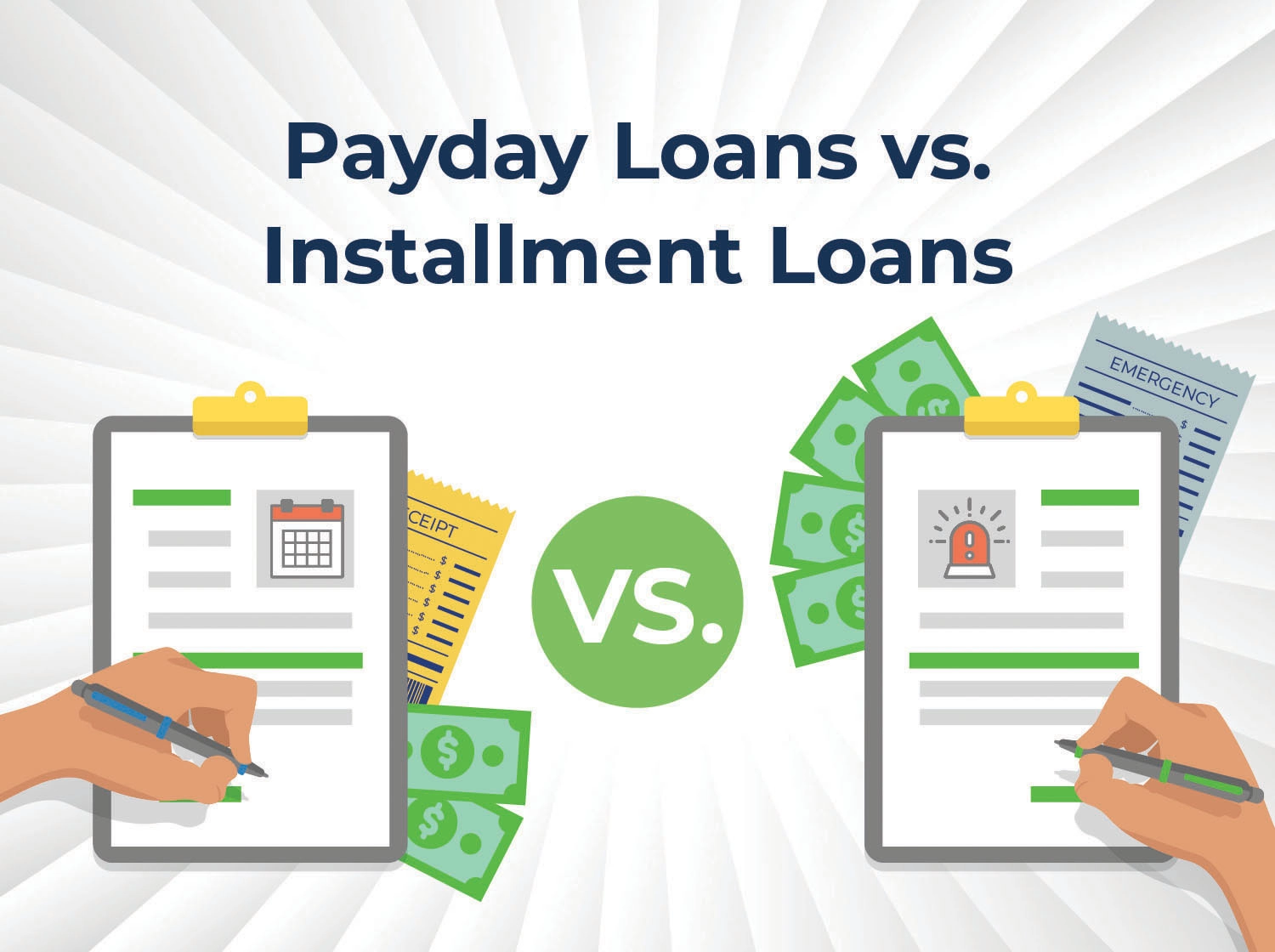
The Short Answer
An installment loan and a payday loan both let you borrow money in Canada. However, they work in very different ways. You repay an installment loan through several scheduled payments over time. In contrast, you usually repay a payday loan in one lump sum on your next payday. This difference affects how each loan fits into your weekly or monthly cash flow.
Payday loans also carry a short term and a high cost. In most cases, they cover a cash shortage for only a few weeks. Installment loans, on the other hand, offer a longer repayment period. As a result, each scheduled payment may fit more easily into a monthly budget.
In Canada, provinces regulate payday loans. Rules typically cap these loans at $1,500 and limit the term to 62 days or less. Where specific payday-loan rules apply, lenders may charge up to $14 for every $100 you borrow. You can review the current rules in the Financial Consumer Agency of Canada payday-loan guide. The FCAC also explains how regular borrowing works in its personal-loan guide.
What Is an Installment Loan?
An installment loan gives you a lump sum of money upfront. You then repay it over a set period. Depending on the lender, you may make weekly, biweekly or monthly payments. The term can last a few months or several years. For example, a lender might set biweekly payments that match your paycheque schedule, which can make budgeting simpler.
Because you make several payments instead of one, an installment loan may create less pressure on a single paycheque. Still, a longer term can increase the total interest you pay. Therefore, always compare the annual percentage rate (APR), fees and total cost before you accept an offer.
Before approving an application, an installment lender may review:
- Your income and employment
- Your current debts and regular expenses
- Your credit history
- The payment amount you can reasonably afford
What Is a Payday Loan in Canada?
A payday loan is a small, short-term loan. Lenders design it to cover a brief cash-flow gap. Usually, you must repay the principal and borrowing cost together on or before your next payday. For instance, a $300 payday loan might come due in full just two weeks after you receive it.
Although the dollar fee may look small, the cost can run high compared with the amount and time involved. In addition, one large repayment can leave less money for rent, food and other bills. As a result, some borrowers take out another short-term loan, which can start a costly borrowing cycle.
Installment Loan vs. Payday Loan: Key Differences
| Feature | Installment Loan | Payday Loan |
|---|---|---|
| Typical amount | Varies by lender | Usually up to $1,500 |
| Repayment period | Weeks to years | No more than 62 days |
| Payment pattern | Several scheduled payments | Usually one lump-sum payment |
| Borrowing cost | Varies by APR, fees and term | Up to $14 per $100 where regulated |
| Application review | Income, debts and often credit history | Usually income or bank-account activity |
The payment structure marks the clearest difference between these two loan types. However, a smaller scheduled payment does not always mean a cheaper loan. For that reason, compare the total repayment amount as well as the payment size.
Some provinces also allow extended payment options for repeat borrowers, while others set additional limits on rollovers. Always check your province’s specific payday-loan rules before you sign an agreement.
How to Compare Your Options
Before you borrow, read the complete loan agreement carefully. A careful review now can prevent costly surprises later. Then, ask yourself these questions:
- What is the APR?
- How much will I repay in total?
- Are there any optional or required fees?
- How much is each payment, and when is it due?
- Can I make every payment after covering my essential expenses?
- What happens if I miss or return a payment?
- Can I repay the loan early without a penalty?
What Happens If You Miss a Payment?
If you miss an installment payment, the lender may charge a fee or report the missed payment to a credit bureau. The result depends on your agreement. Therefore, contact the lender as soon as you expect a problem.
If you cannot repay a payday loan on time, the lender may add extra charges. More importantly, the shortfall may push you toward another loan. Consequently, confirm that the full repayment fits your budget before you borrow.
A Simple Example
Suppose you need to borrow $1,000. With a payday loan, you may need to repay the full $1,000 plus the borrowing cost from one paycheque. With an installment loan, you can divide the balance across several payments instead. For example, a $14-per-$100 fee on a $1,000 payday loan could add up to $140 in borrowing cost within just a few weeks. An installment loan spread over several months may carry a lower rate, though the longer term can still raise the total cost.
The installment structure may feel easier from week to week. Nevertheless, you still need to check the APR and the total repayment. In the end, the best option depends on the full cost, the payment dates and your available budget.
How GoodLoan.ca Compares
Simple Online Application
You can apply online. However, GoodLoan does not guarantee approval or specific loan terms.
Clear Payment Schedule
You can review your payment dates, amounts and loan terms before you accept an offer.
Affordability Review
GoodLoan considers your income, existing obligations and credit information.
The Bottom Line
Installment loans spread your repayment over several dates. Payday loans usually require one large payment within a short period. Therefore, an installment loan may offer a more manageable schedule for many borrowers. However, no loan is automatically affordable. Finally, compare the APR, fees, total repayment and effect on your budget before you decide.
Ready to Review Your Options?
Submit an application to see whether you qualify. Approval and final terms depend on GoodLoan’s review.